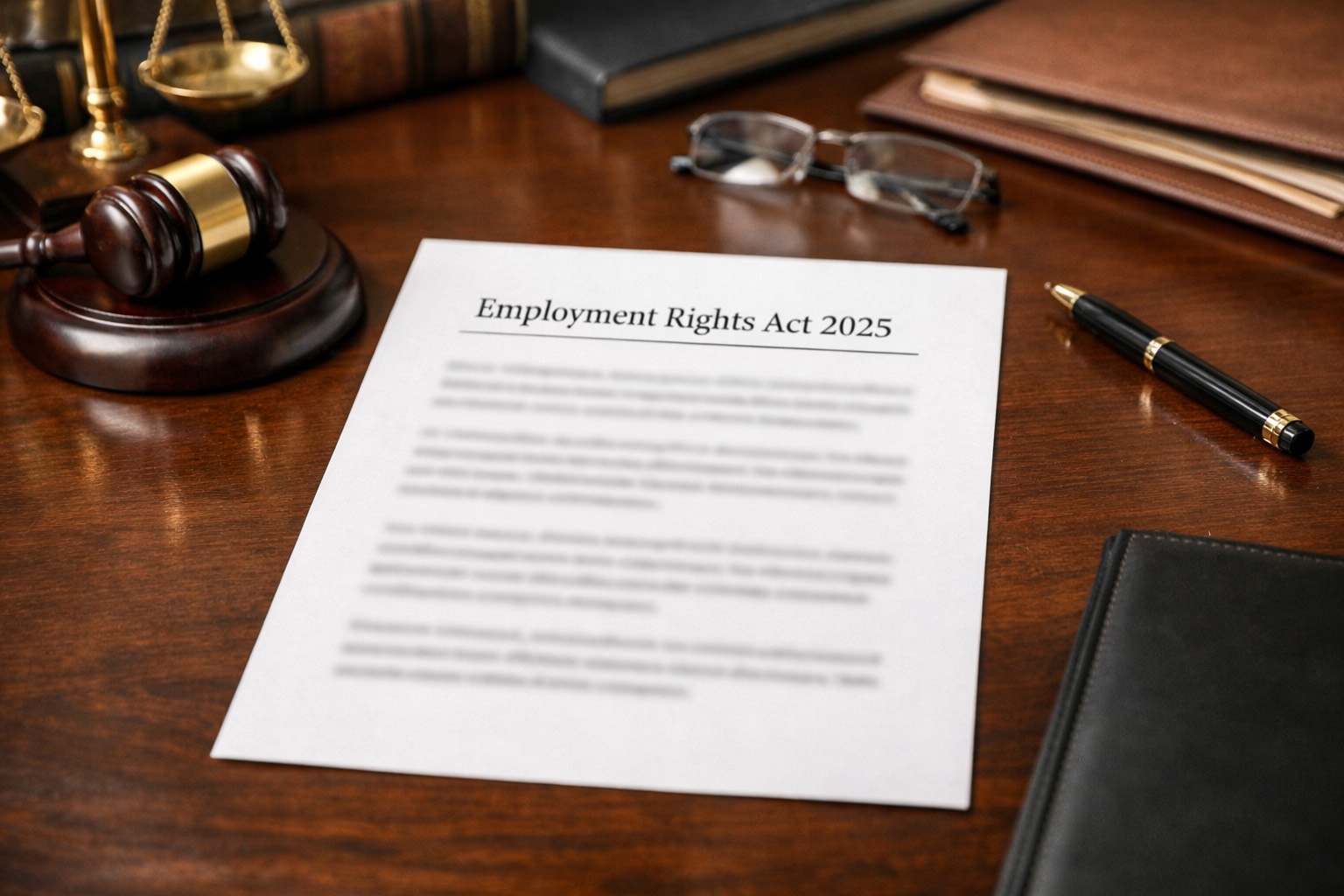
There are some wide-ranging changes which means that organisations will need to look at their contracts, policy documents and procedures.
However, fortunately, the major changes are not happening immediately.
The timetable as set out in the Act for changes is as follows:
a) Immediate Change
Rules about “minimum service levels” for strikes were removed on 18th December 2025. This is unlikely to have any significant impact.
b) February 2026 Changes
These relate to increased dismissal protection for industrial action and trade union activity.
c) April 2026 Changes
(1) Paternity leave will become a “day one right”.
(2) Ordinary parental leave will also become a “day one right”.
(3) The restriction on taking maternity leave after shared parental leave will be removed.
Currently paternity leave is only a right after 26 weeks of service and ordinary parental leave only a right after a year’s service.
(4) Statutory sick pay will be payable from the first day of illness rather than the fourth.
(5) The lower earnings limit for statutory sick pay will be removed.
(6) A change will come in with regard to collective redundancy protective awards doubling the award from 90 days’ pay to 180 days’ pay.
(7) There will be protection for individuals making sexual harassment complaints. These will now be regarded as whistleblowing.
(8) Companies will be encouraged to create action plans around menopause and gender pay gaps. These action plans will become mandatory at some point in 2027, but no date has yet been given.
(9) Trade unions will have a more simplified process for getting recognition in a workplace and trade union members will be able to vote electronically.
d) October 2026
(1) Dismissing somebody then re-hiring them on worse terms and conditions will become an automatically unfair dismissal.
(2) Employers will be liable for harassment of employees from third parties, i.e. customers, clients etc. subject to a defence of ‘all reasonable steps’ having been taken.
In terms of harassment complaints by employees, the employer will have to show it has taken “all reasonable steps” to prevent the harassment rather than simply “reasonable steps” as the law states now.
(3) There will also be some changes relating to non-disclosure agreements.
Please note the above changes are subject to further consultation.
(4) Tipping laws will change with employers needing to consult with workers or their representatives before creating a tipping policy and having the need to update the tipping policy every 3 years.
(5) Perhaps of more significance, the time limit for making a claim to an Employment Tribunal will increase from its current 3 months to 6 months.
(6) There will be further protection for people becoming trade union members and the need for employers to inform workers of their right to join a trade union.
e) January 2027
This is the major change that caused much debate in Parliament. The right to claim unfair dismissal will now exist after 6 months continuous service rather than 2 years. Fortunately the Government backed down from its suggestion that unfair dismissal should become a day one right.
f) 2027
There are going to be further changes strengthening protection against dismissal for pregnant workers and those returning from maternity leave.
There will also be a new right to statutory bereavement leave.
Zero hours workers will have the right to request guaranteed working hours.
Workers will have the right to be paid for cancelled shifts.
There will be further changes to flexible working regulations and collective redundancy arrangements.
These last changes have not got an introduction date. Further consultation will be taking place. In reality I suspect the datelines will be pushed back.
Finally, there is a proposal to increase or remove the cap on compensatory awards for unfair dismissal. However, an impact statement is going to be produced first.
Clearly the main change is the reduction in the qualifying period for unfair dismissal claims from 2 years to 6 months. We think contract documentation should be changed to tighten probationary periods and there will be a need to change policy documents in terms of processes during probationary periods etc.
Whilst the reduction in the qualifying period will require employers to be far more careful in terms of letting time slip etc., there may actually be a positive benefit arising as well.
At the moment there is a significant increase in spurious claims for discrimination from disgruntled employees who have less than 2 years’ service. We think these claims may well reduce when employees have a quicker right to claim unfair dismissal. This should simplify the claims process from the employer’s point of view.
It is frustrating that there are still some areas where we have vague suggestions of changes. However, we think we now have sufficient information to look at reviewing contract documentation, policies, manuals etc.
If you are interested in any discussions about this, or would like Ward Gethin Archer to look at your documentation and suggest amendments etc., please do not hesitate to get in touch with Chris Dewey at chris.dewey@wga.co.uk.